Veneer & core selection
Ply count, veneer species and grain direction are decided per model. No sheet enters the line before its moisture content is measured.
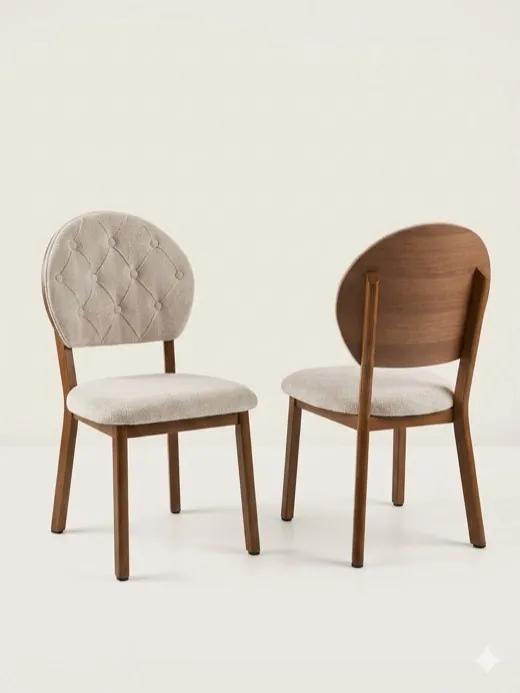
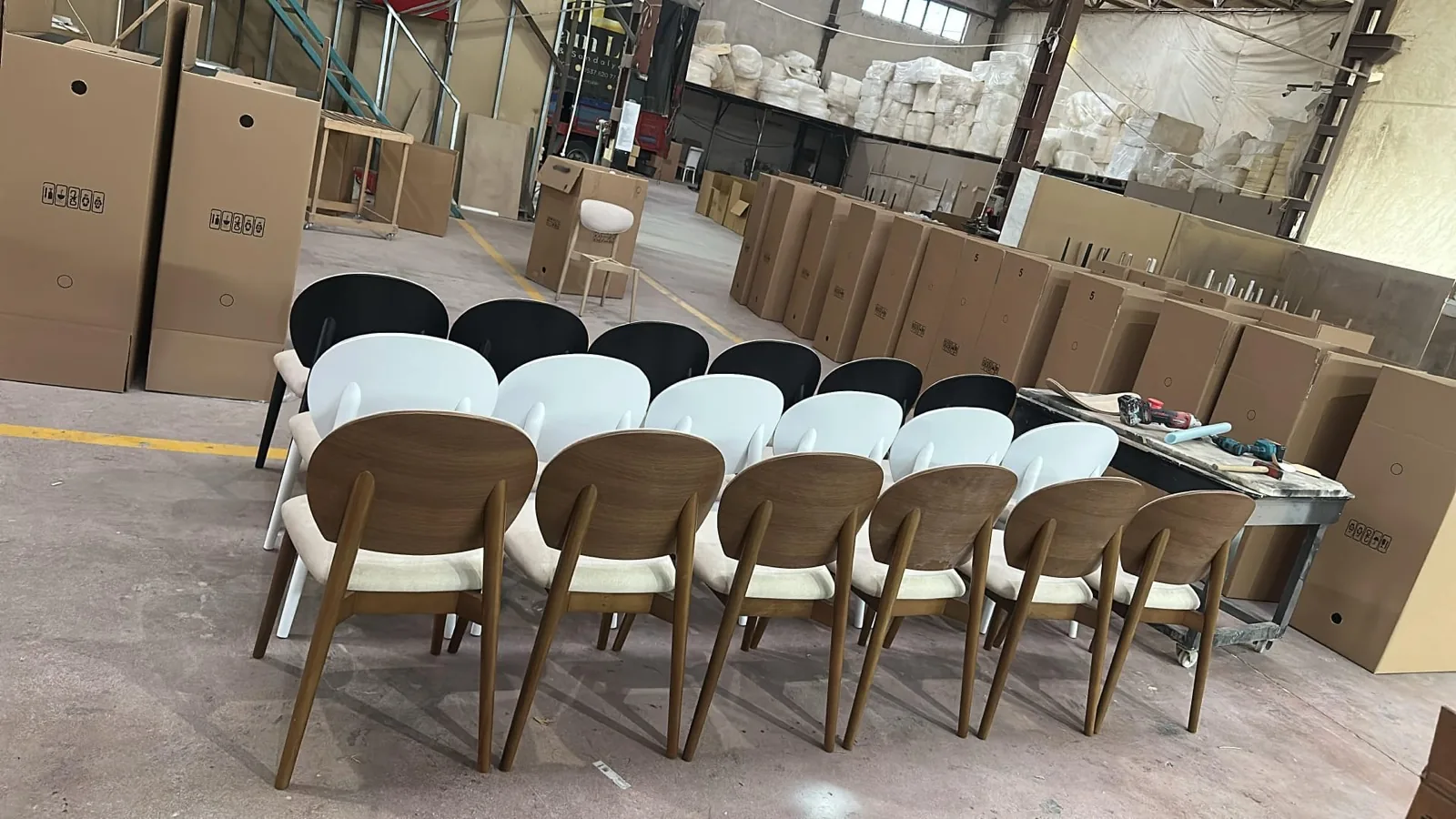
We manufacture 3D-moulded veneered, lacquered and upholstered chair backrest and seat panels. For furniture makers who want to step outside the standard mould — your own form, your own dimensions, your own finish.
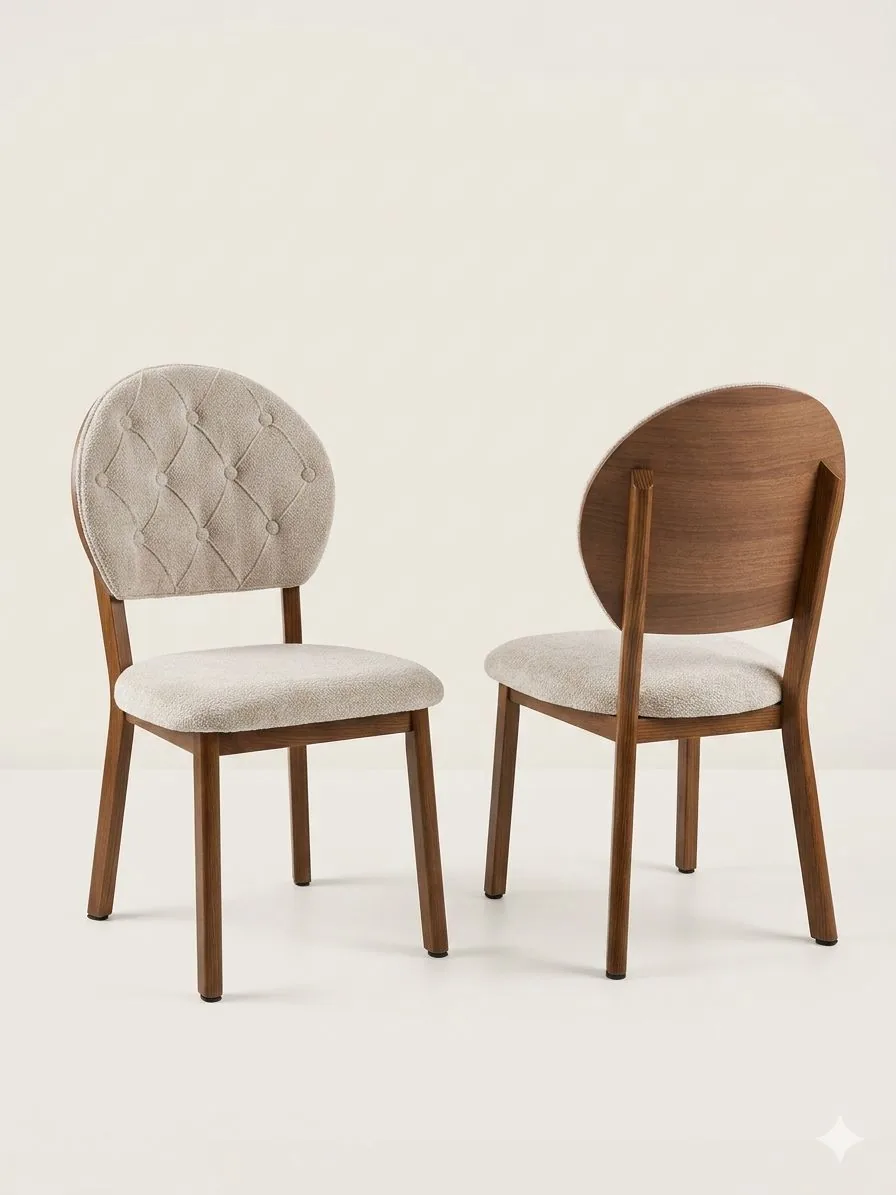
The backrest panel carries the chair’s frame and gives it its identity. In the Turkish market it is usually treated as a flat, one-size-fits-all, low-cost part. We do the opposite: every panel is pressed, cut and finished to match the chair it will become.
The result is a curve that matches the seating angle exactly, a clean edge profile, a scratch-resistant surface and dimensional consistency that holds up in serial production.
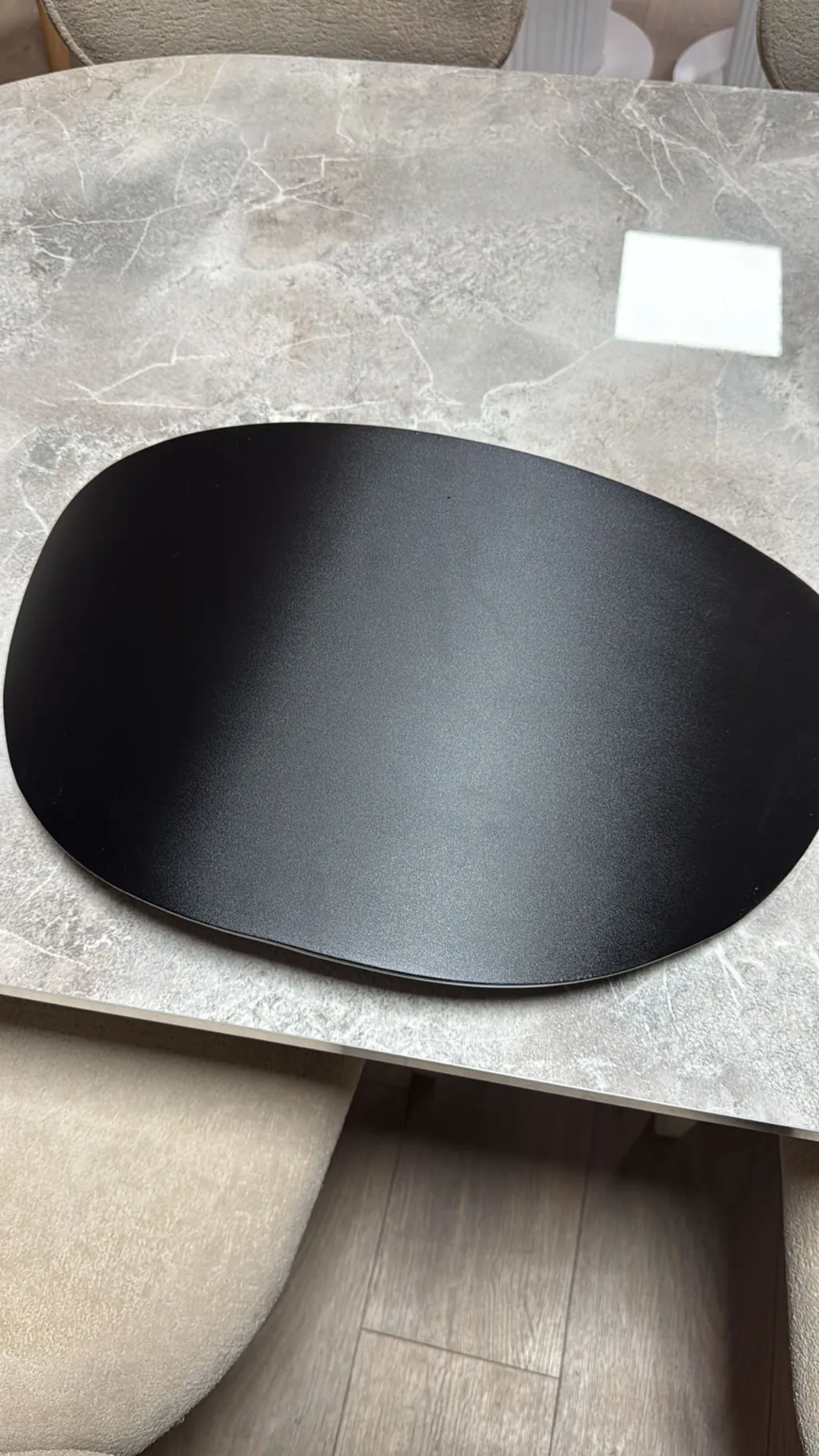
From natural veneer to multi-coat lacquer, each family has its own mould, its own press and its own finishing line.
Two parts doing the same job do not produce the same chair. We put the difference in at the production stage.
One flat shape, or a slight curve on a single axis
Double-axis 3D moulded curve shaped to back anatomy
The same stock mould everyone else gets
A dedicated mould for your model — your form stays yours
Visible saw marks; veneer cracks over time
CNC-profiled, sanded and sealed edge
Limited colours, single coat of paint
Wood veneer, multi-coat lacquer, texture and matt/gloss options
Drifts between batches, leaves gaps at assembly
Same template every batch — no adjustment on the assembly line
Delamination and loss of curve over time
Controlled drying and glue regime keep the form stable
Seven stations. Dimensions and surface are checked at each one; a faulty part never reaches the next station.
Ply count, veneer species and grain direction are decided per model. No sheet enters the line before its moisture content is measured.
Plies are cut to size and glue is spread at a fixed weight in cross directions, so the form holds evenly at every point.
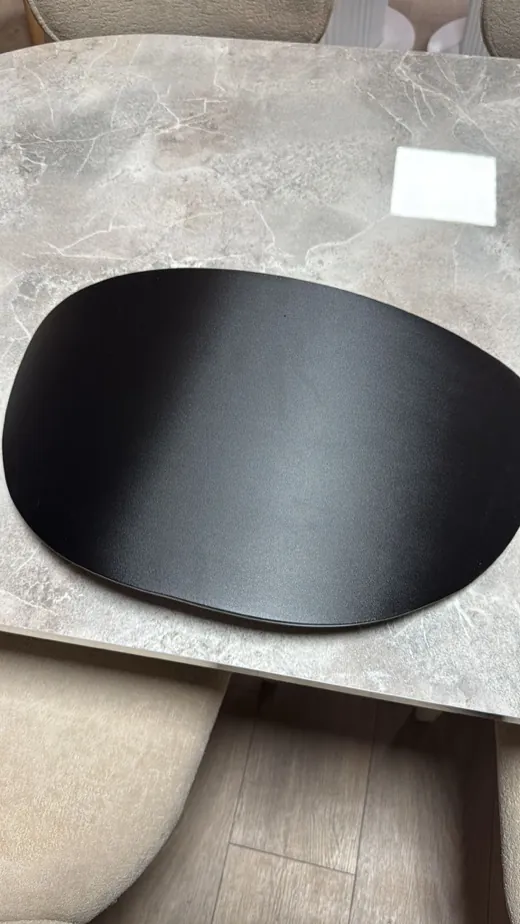
Pressed in the model’s own mould under controlled heat and pressure. This is where the panel gets its character: the double-axis curve.
Outline, hole positions and edge radius are machined in a single program — every part comes out identical to the last.
The surface is opened with graduated sanding and the edge is checked by hand. Only then will paint or veneer hold properly.
Depending on the chosen finish, multi-coat lacquer, natural veneer or fabric upholstery is applied; colour is compared to the reference card in every batch.
Dimensions, surface and colour are checked one last time; parts are interleaved with protection and palletised ready for container loading.
The backrest takes more load than any other part of a chair. We inspect it accordingly.
Container-ready packaging, export documentation and committed lead times.
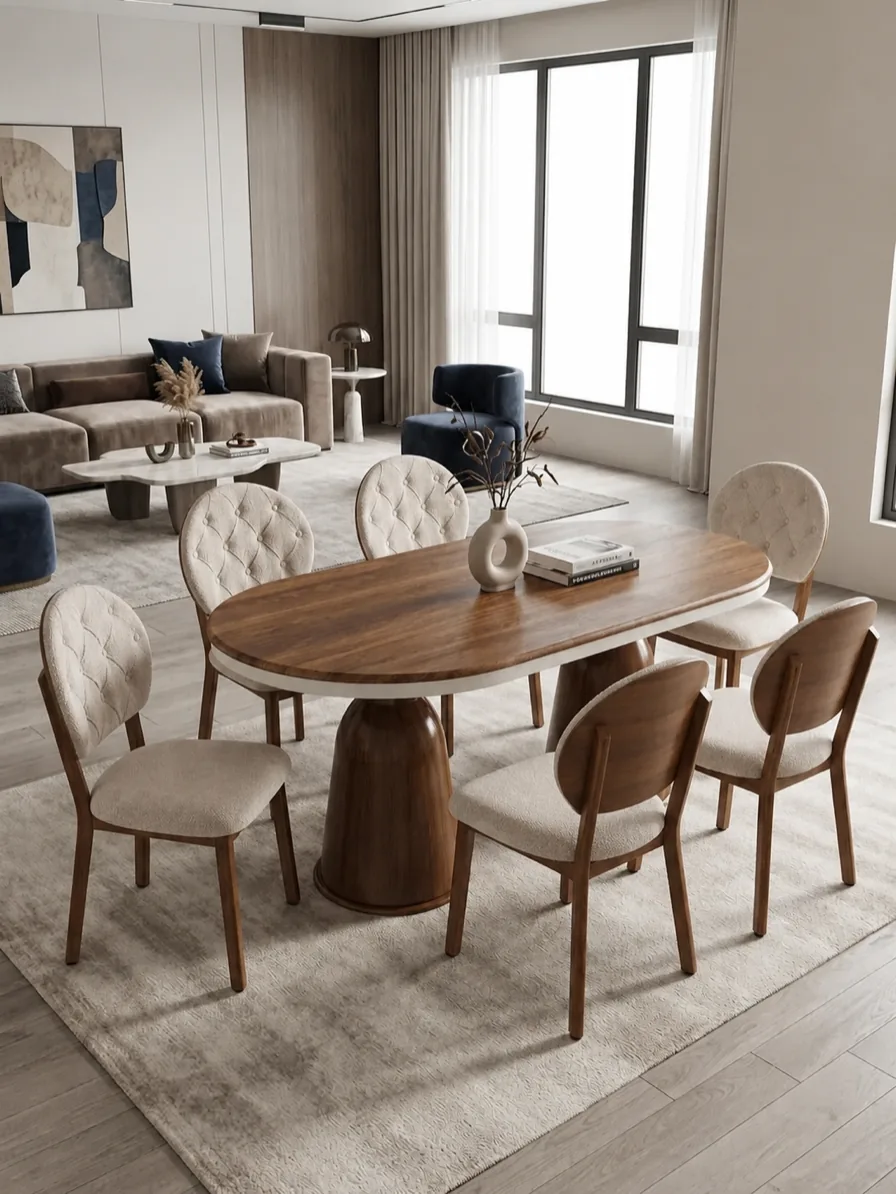
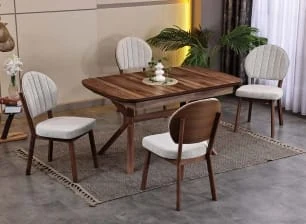
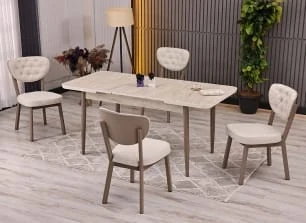
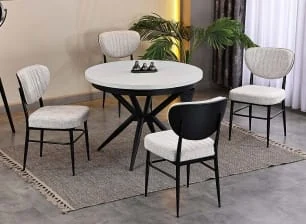
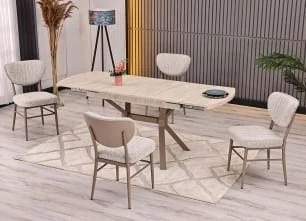
The backrest and seat panels of the sets below came off our line.
It ranges from 300 to 1,000 pieces depending on the product family: 500 for veneered and seat panels, 500 for lacquered, 300 for upholstered. We stay flexible on first orders.
Yes. We produce the mould from a technical drawing, a photo or a physical sample. The mould is made once and that form stays yours — we do not produce from it for anyone else.
First we agree the dimensions and finish, then we produce a sample and ship it. Serial production starts after sample approval, and the approved piece is kept as the reference.
Between 12 and 30 days depending on the product family. For first runs requiring a new mould, mould time is added. The lead time is committed in writing at order confirmation.
Parts are interleaved with protection and palletised for container loading. Invoice, packing list and certificate of origin are prepared by us; shipping can be arranged by you or by us.
For first orders we work with a deposit plus the balance before loading. Payment terms can be discussed for regular customers.
A technical drawing, a photo or a physical sample in your hand — whichever you have is enough. We agree the dimensions and finish together, then produce a sample.